Making Room for the Newcomer: Being a Welcome Field in a Time of Mass Migration
Part of the Series on Identity Beyond Capitalism

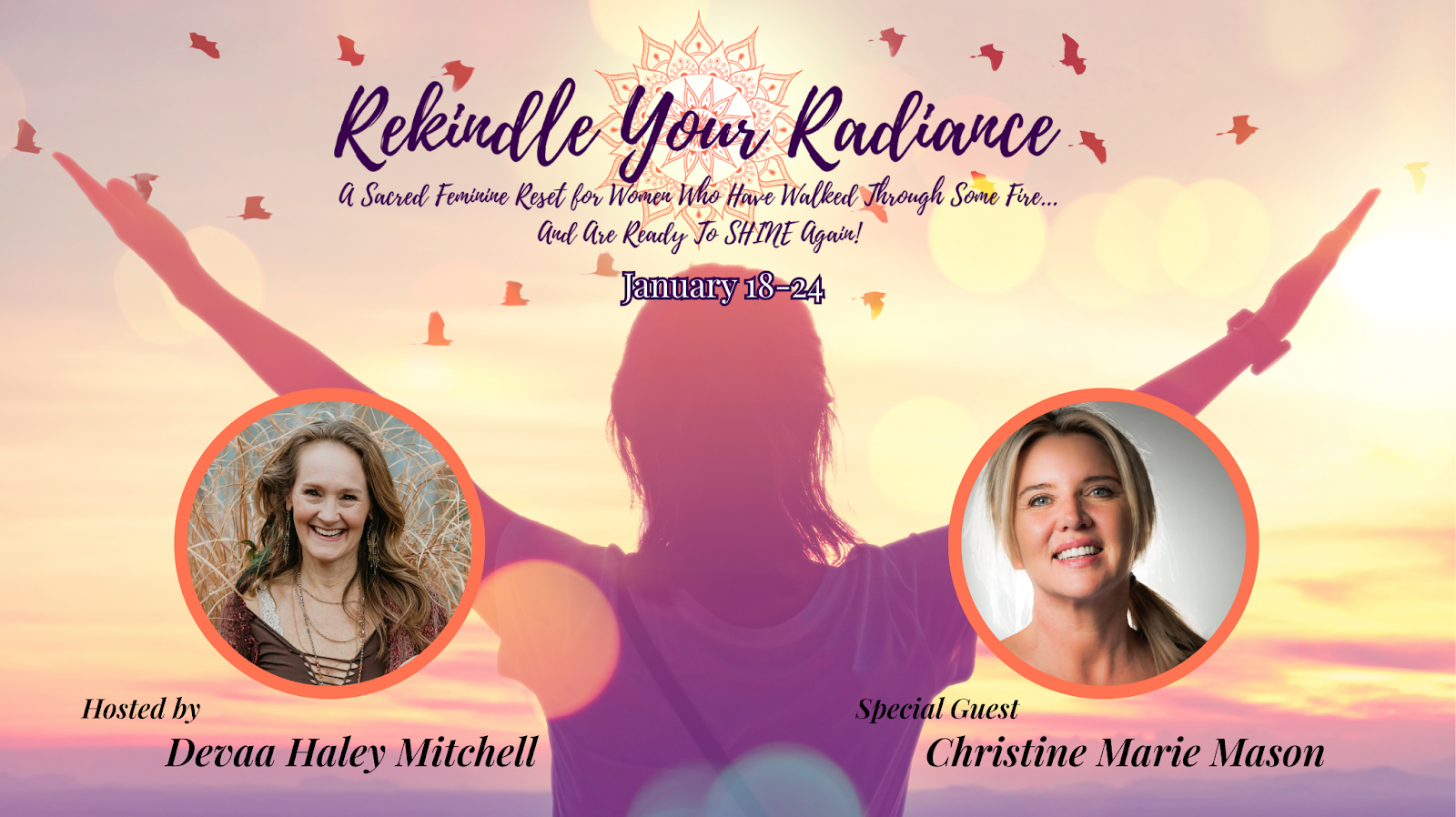
Announcements….. 1st, for the women who read The Museletter: Rekindle Your Radiance with Devaa Haley Mitchell (founder of the Shift Network), starts today and goes all week. It’s a free online program with 3 live zooms and daily recorded transmissions from 22 people. One from me on Creating from Essence. You can sign up here. 2nd, I have one king room open in the May Intensive in Portugal. It’s going to be stellar. I’ve just added an elder mystic who will guide the day of Sacred Sites in Lisbon. 3rd, Our Easter intensive (with medicine) is also open for registration.
Hi Friends,
Migration is a universal archetypal human experience. Every culture carries stories of exodus and arrival, wandering and homecoming.
We can learn from where it’s been elegant and where it’s been clumsy — what makes the difference between integration and fracture, welcome and rejection or outright attack. It’s a important question now: 120 million people are displaced today (double what it was a decade ago), and climate models project 200 million more (and by some estimates a billion more) involuntary migrants by 2050.
In a world with hundreds of millions on the move, we have a spiritual opportunity, and a set of skills to practice. Skills around identity and its dissolution. Around holding complexity without shutting down. Around what it means to be the welcome field: the space that receives without grasping, that transforms both the one who arrives and the one who was already there.
Note: This is part of a series on Post Capitalist Identity Formation.
I hope you enjoy this piece and please comment or share.
All love from South India,
Christine
TLDR/ In this essay (a new function that Marc Coopers suggested I implement for the busy and non-readers):
The welcomer must change too: deprogramming the dominance reflex that wants to fix, explain, or set the terms
Both the displaced and the one who receives are doing the same spiritual work: releasing who they thought they had to be
Research shows a “contact threshold” where welcome tips into threat, and this can be widened through narrative, infrastructure, and perceived fairness
A post-dominance identity is rooted in reverence, radical empathy, and the capacity to move with complexity without shutting down
The goal isn’t tolerance or charity, but a genuinely new field where belonging is a capacity we grow together
Widening the Contact Threshold
Researchers have long studied how the density of immigration changes social dynamics between long-term residents and newcomers. They’ve identified something called the “contact threshold” — the invisible tipping point where positive intergroup contact tips into perceived threat.
But we know this in our bodies before any study calls it out, don’t we?
When change is gradual (the number say one in seven houses on a street) there’s more room for curiosity, welcome, even neutral tolerance. When well-supported with interpretation, co-housing, and community ritual, it can expand worldview and build unexpected kinship. Residents feel they are sharing space, not losing it.
But when change is rapid or clustered (seven houses on one block, all at once) the nervous system reads it differently. Especially if the newcomers are racially, religiously, or culturally distinct. Especially if the long-term residents already feel economically insecure, unheard, disempowered. Fear rises. Turf defense activates. “Invasion” narratives take hold. Some people rise into solidarity. Others react with exclusion or resentment. The community polarizes.
The Post Dominance Identity
My vision of a post-dominance identity is rooted in reverence. It’s shaped by radical empathy, joyful activism, and the spiritual capacity to move with complexity without shutting down.
In Bending the Bow, I wrote: “I am more than my race, my gender, my species.” This is a stepping out of the identity structures created by supremacy and into something more relational and alive. It is, essentially, the same work the displaced are being asked to do. Both are letting go of who they thought they had to be. Both are meeting each other on the edge of not knowing.
Ask any refugee or unwilling migrant: the doctor fleeing war who now works in a convenience store; the professor sweeping floors; the householder with no home to care for…. the loss of identity and purpose is one of the hardest parts of displacement.
So why would any field of people gatekeep the full expression of the newcomer’s gifts? Why not invite everyone into their highest potential, to use their training and bring their light and let the field be changed?
Welcomers need to deprogram the dominance reflex. The part that wants to fix, to explain, to set the terms. The part that wants to hold onto control even in the act of generosity. So the welcomer must change, too. And that change starts at the level of identity.
And for the new arrival, the invitation is parallel: approach a new land and lineage with humility. Not arriving saying “this is mine,” but “I am listening.” In Becoming Indigenous, I write about approaching a place or a person with respect, curiosity, and willingness to be transformed — not to consume or colonize. This, I believe, is what allows real relationship to emerge.
Rather than integrating each other into the old system, we are invited to co-create a new one. If we are still rooted in extraction, ownership, domination, or saviorism, then our welcome of the refugee or the displaced will be conditional, performative — or worse: infused with subtle violence.
What Works
Narrative. When communities are told a shared story about what’s happening — why, how we’ll navigate it together, what values we’re upholding — outcomes are dramatically better. Story creates coherence. Coherence calms the field.
Infrastructure for belonging. Language access, housing support, trauma-informed care, shared spaces. Not just service delivery, but relational containers: town halls, intercultural dialogue circles, leadership that listens. Where these exist, conflict drops.
Perception of fairness. Even generous communities turn hostile when they believe newcomers are being prioritized over long-term residents. Transparent policies and shared benefit reduce backlash. The body relaxes when it trusts the process is just.
Canada’s private sponsorship model is one of the most beautiful examples I encountered in researching for this piece. Citizens co-sponsor a refugee family and walk with them for a full year. It personalizes the experience. It builds bonds across difference. It transforms both parties.
Contrast this with what happened in parts of Sweden and France: high-density, high-speed resettlement in suburban enclaves, with little integration programming. Both new and established residents felt abandoned by government, and social tension rose accordingly.
In the U.S., cities like Clarkston, Georgia and Tucson, Arizona leaned into mutual aid, trauma-informed civic engagement, and interfaith organizing. They reported stronger long-term cohesion than places that framed immigration only as a security issue or a charity case.
The Nervous System and the Soul
So much of this comes down to what you already know in your body.
Sudden, unprocessed change creates dysregulation, especially when there’s no time for the relational field to expand. People need time, ceremony, and shared rhythms to metabolize difference into kinship. Fear is not inherently dangerous. It becomes violent only when we have no way to stay in connection while feeling it.
This is the spiritual work beneath the political one.
If we don’t learn to see the sacred in the unfamiliar, we will keep repeating history. The newcomer will always be a threat. The host will always be a gatekeeper. The cycle will continue.
But if we can meet at the level of essence — if we can see through the false separations — then something else becomes possible. Not tolerance, but recognition. Not charity, but reciprocity. Not the old power structure with kinder language, but a genuinely new field.
A welcome field. Where both the one who arrives and the one who receives are transformed. Where we discover that we were never as separate as we feared. Where belonging is not a resource to be hoarded, but a capacity we grow — together.
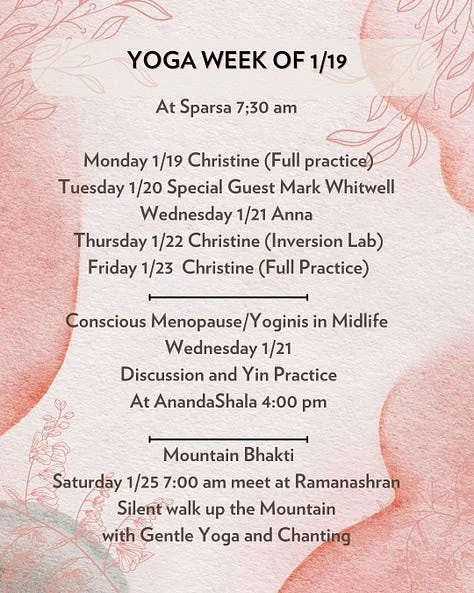
Yoga This Week in Tiruvannamalai.
All Programs benefit the Terre des Hommes orphanage and children’s trust on Perubakkam Road. For 30 years, offering long term homes for parentless children, emergency housing and child rescue and trauma recovery.
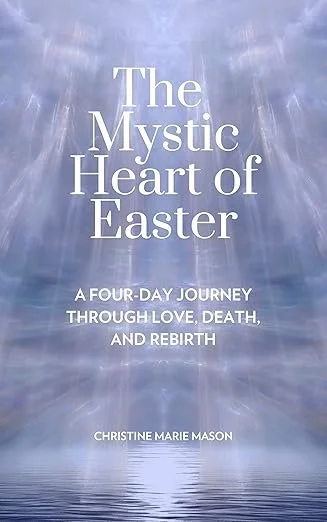
New: The Mystic Heart of Easter
NOT religious, but deeply pointing to the universal opportunity in these high liturgical days. Being very well received by practitioners as a meditation guide. Our April retreat will be working with these themes. Love, Death, Ambuguity, Rebirth, Transfiguration, Trusting Life.