
The Snake Is Also a Woman
The Yawanawá women came to visit. On attunement, pedestalizing indigeneity, the limits and powers of the plants, and on looking within.
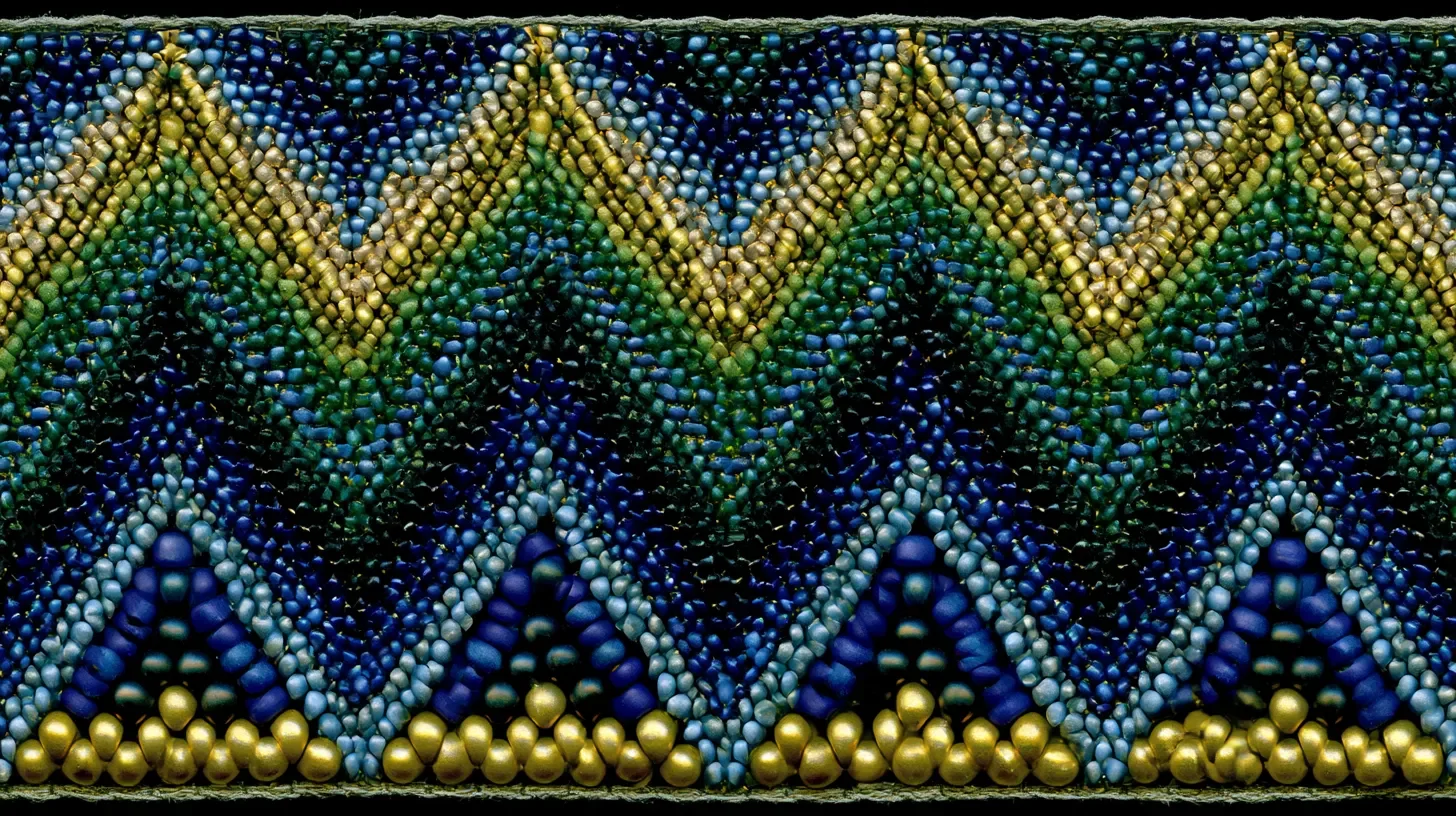
The Snake is Also a Woman
A week ago, Shiva and I hosted a circle on our land for the women of the Yawanawá, an Indigenous people of the western Brazilian Amazon. They had traveled a long way from their village on the Gregório River in Acre, days by river and air to sing, to teach, and to sit with people at gatherings across the United States. One evening Hukēna, a teacher in her early thirties, told the story of how the women of her people won their place in the spiritual life of the tribe.
She said she could not begin anywhere but with her mother.
Her mother is Hushahu Yawanawá, the first woman in her people to become a pajé (a healer-shaman) in a lineage that for generations had been closed to women entirely. A generation ago the women of the village were married off as children and kept to the home; Hushahu herself married at eight (!).
The medicine, the songs, the visions belonged to the men, and women weren’t permitted even to pass near a ceremony. Then came the colonizers, the missionaries, and the men who arrived to strip the land, and with them the alcohol and the bans: no practicing the language, no medicine, none of their own culture. For the women OR the men. The tradition came within two living elders of disappearing!
What pulled it back from the edge of extinction was Hushashu’s devotion and intention. After years of suffering, Hushahu fought to be allowed into the muká, the year-long initiation that confers the power to heal. She and her sister Putani went into the forest saying that if they died, they would die seeking something new for the women, and a different future for their daughters.
When they finished the year, the men of the village refused to recognize their power and sent them back for a second round; they completed it twice over, passing doubly what the men had passed once. They came out healers.
In that long isolation a great blue butterfly landed on Hushahu’s open hand, and a snake was laid beside her as a gift, the Jiboia. In her vision, Jiboia is a serpent below and a woman above.
The word itself carries the dream already embedded in it. From Old Tupi îyboîa — the one who constricts, the one whose killing is an embrace, the jiboia enters Amazonian indigenous cosmology not as threat but as teacher and intermediary. In dreams and ayahuasca visions she appears as a primary guide: the white jiboia in particular is invoked in shamanic traditions for mental clarity and focus, her arrival understood as a significant event bringing expansion of love and spiritual energy, her serpentine movement a flow of healing through the body and the field. The dream register of the jiboia is simultaneously personal and cosmic: constriction and release, old skin shed, the self reorganized around a deeper axis. To dream of the jiboia is to be visited by something ancient and sovereign, a particular intelligence of transformation
Hushahu’s snake was also a woman, and that is what happened. The women brought transformation. Hushahu brought back the women’s singing voice, slowing the pace of the songs to one the people could follow, and gave them the kene, the sacred designs her people now treat as inseparable from who they are. Because of her, the girls of the village are no longer married away; the violence has receded; the women hold their own work, their own money, their own paths. A culture that was two elders from silence now sings in a language that was once forbidden.
That is a triumph.
And then, without ceremony, Hukēna turned the talk to power, and how it is abused in ceremony, and everywhere. As she spoke I felt something in me drop, because across the first half of the evening I had already been seeing my idyllic projection on the Yawanawa (and by transference principle, the Huni Kuin, and the other indigenous people that gift their medicine) give way, and a dawning sense of dull perception: my projection of the pure people of the forest, in touch with the plants and with one another, the image so many of us cross the world to find, dropped away.
The lineage of that idolatry is older than my private fantasy, my private longing for simplicity, utopia, for community that sings and dances and prays together. The phrase “noble savage“ entered English through Dryden in 1672, and fastened itself to Rousseau (unfairly as his actual account of natural man was far more careful than the slogan it became). The image of the indigenous person was held up as a mirror to European lack, as innocent, unfallen, closer to the source, in possession of everything the modern soul suspects it has misplaced, is itself largely a Western invention, a costume, no more the real person than its cruel twin, the “bloodthirsty primitive”. The flattering image and the contemptuous one are the same operation. Both refuse the person their full, present, complicated humanity; both deny the other coevalness, a place in the same present as ourselves, freezing them instead into a purer past.
In this and in many other areas, idealization is the benevolent face of othering. It feels like reverence yet works like erasure.
And for those of us who go seeking, who cross oceans hoping the untouched ones will be whole in the way we are not, the worship is a sort of refusal of intimacy, of actual connection, to meeting the present human being, because we have already replaced her with what we need her to be.
To put anyone on a pedestal is an inability to see or feel the whole person in the other.
AND it is precisely this which makes us susceptible to abuse by the indigenous person serving medicine who is in fact not an initiated guide.
Hukēna took the idol apart. It is not because she sits before the altar, she said, that she is good; she is not all good. But before this path she was worse. And then she named the abuses, without drama, the way you name weather. There are real plants (she has used one herself, on a cousin, just to see whether it worked) that can bind a person’s longing to you, and she has watched people abandon their whole lives to follow someone, saying I can’t live without this person, unable to break what was placed in them.
In ceremony, she said, beware: watch the paje who looks at you a little too long, who treats you better than anyone else in the room, who comes and blows a prayer across your cup; there is an intention inside that attention, and it is rarely yours. She has met women abused under the cover of I had a vision about you, where the facilitator calls a participant aside to do “work,” and by the time you understand what is happening, it has already happened. She has seen people grow addicted to ceremony itself, and to being healed, handing their own authority again and again to whoever stands at the front of the room. And she was clear that the ugliest of it is not exotic at all: it wears the same face as the abuse in any house. The ones who are supposed to be safe and are not.
The plant gives power, she said, every kind you can imagine, and whatever you do with it stays with you. You choose.
I have come to think this is the most misunderstood thing about these medicines.
They are revealers. They can lift the floorboards and show you what has been living underneath; they can grant a vision so total that you are certain, in the moment, that it has already changed you. But revelation is not transformation. Seeing is not becoming. The medicine can show you the wound, the pattern, the person you have been refusing to be. Then it sets the vision down in your hands and withdraws, and everything that matters after that is yours.
The unglamorous part, the part no plant performs for you, is integration: taking what you were shown and metabolizing it, slowly and soberly, into an actually different life: a kinder marriage, a returned phone call, a boundary held, an amends made. That work happens at the kitchen sink, not the altar. The medicine reveals; you integrate, or you do not. Hushahu took the same family of plants another person uses to seduce and manipulate, and carried it home to end child marriage for a whole people. Same revealer, opposite lives. The vision is given. What you walk out of the room and actually live is chosen.
So the question rose in me, ungenerous and real: if it does not reliably make people who can feel one another, and if some of the people serving the medicine are behaving like this, then what good is any of it?
I have walked a path long enough to recognize that question. It is not really about ayahuasca; it is the vertigo that comes on every road of awakening, the moment the road stops flattering you. My own tradition is not innocent here.
The history of tantra is full of adepts who gained the powers and lost the thread, who could move energy and bend a room and still not feel the person beside them. Recognition of one’s own nature does not excuse conduct; you can taste the absolute and still be cruel as a matter of daily habit. Power reveals character.
Which is why what Hukēna did in her talk was important and something I see as the tradition working. A living path turns and critiques itself; a dead one can’t. The warning was the medicine, not a footnote. She has built her own practice on its opposite: consent before a hand is laid on anyone, no one singled out, each person’s limit held as sacred.
As I have been experiencing, writing about and teaching about, the more light you bring to your own shadow, the more clearly you see what is in front of you. What we refuse to look at in ourselves does not stay home; we spend it outward. We paint gold onto the pure ones, and we create blind spots where we can’t see the predator. Any disowned thing inside runs the show outside. The inner work is not a retreat from the world. It is what gives us back our eyes. Discernment “out there” begins as “honesty in here”.
That is the whole architecture of safety on any path. See yourself clearly, and do it sober, undrugged by your own spirituality, and do it in relationship, where others can say that is not right and someone can tell you the truth.
None of this softens the harm. People are being hurt in these rooms, as in many so-called churches and houses of worship. Yet the path still carries something worth protecting; that is also true. Both hands stay open.
The women of her line went into the dark and brought the voice back. The least the rest of us can do is keep the light turned on, first of all on ourselves.
Glossary
pajé — a healer and spiritual leader (shaman) of the Yawanawá; the role, once held only by men, that Hushahu and Putani were the first women to enter.
uni — the Yawanawá word for ayahuasca, the visionary brew at the center of their ceremonies.
muká — “the bitter one”; the year-long initiation diet, built around a small bitter plant, that confers the authority to heal. Historically reserved for men.
Jiboia — the sacred boa, holder of knowledge and giver of the deepest voice; in vision, a serpent below and a woman above. The blue butterfly (Awavena) carries the feminine spiritual power alongside her.
kene — the Yawanawá sacred geometric designs, seen in vision and carrying spiritual meaning and protection.
A Personal Note: Living Tantra Institute
Living Tantra is wanting to be a more expanded and structured lineage. For three years I’ve run the introductory course on my personal site, with more drop-in courses and retreats over time, and the student community has grown far beyond what I imagined. Now the teachers who bring focused knowing into the courses will be recognized as faculty, and the Living Tantra components of my offerings have a home of their own. My hope is that it becomes a true blessing on more people, and a lineage certification that grows over time.
When you meet someone with the Living Tantra training, or in the community, you will know they have trained in the recognition teachings the way the teachings ask to be trained: daily, in the body, tested inside ordinary life. The material and the spiritual are one for them, in practice and in relationship, in how they meet the world. They honor the masculine and feminine alive in every soul, and they trust each soul’s evolution — its timing, its intelligence, its own unfolding path. They hold your sovereignty as the ground of any work together, and they create the kind of space where the truth can be investigated with love, curiosity, and no shame.
Lineage-rooted, body-forward, and free of guru dependency.
I am ON MY KNEES for the grace of having found this lineage early. It is like a great ginormous flashlight for including the shadow parts, the family stuff, the culture stuff — and for living in joy. I had a lot of bullshit in my system and architecture: early abandonment and pain, transgenerational family trauma, violence, instability, betrayal karma, and a unique brain that has taken a long time of practice and blessing to unwind. Without these practices I would have been dead a long time ago — or, I can imagine, bitter and resentful. Instead, this radiant effulgent reality awareness is here.
There are testimonials on the site about the teaching and the work with me. But this is the biggest testimonial of all: my devotion to this material, to which I have given so much of my life force and will continue to give. It contains the seeds for a sovereign, just, embodied human culture as part of earth.
The podcast, my books, other writing and events will continue to live at christinemariemason.com.
