
Āsana on the Tantric Path
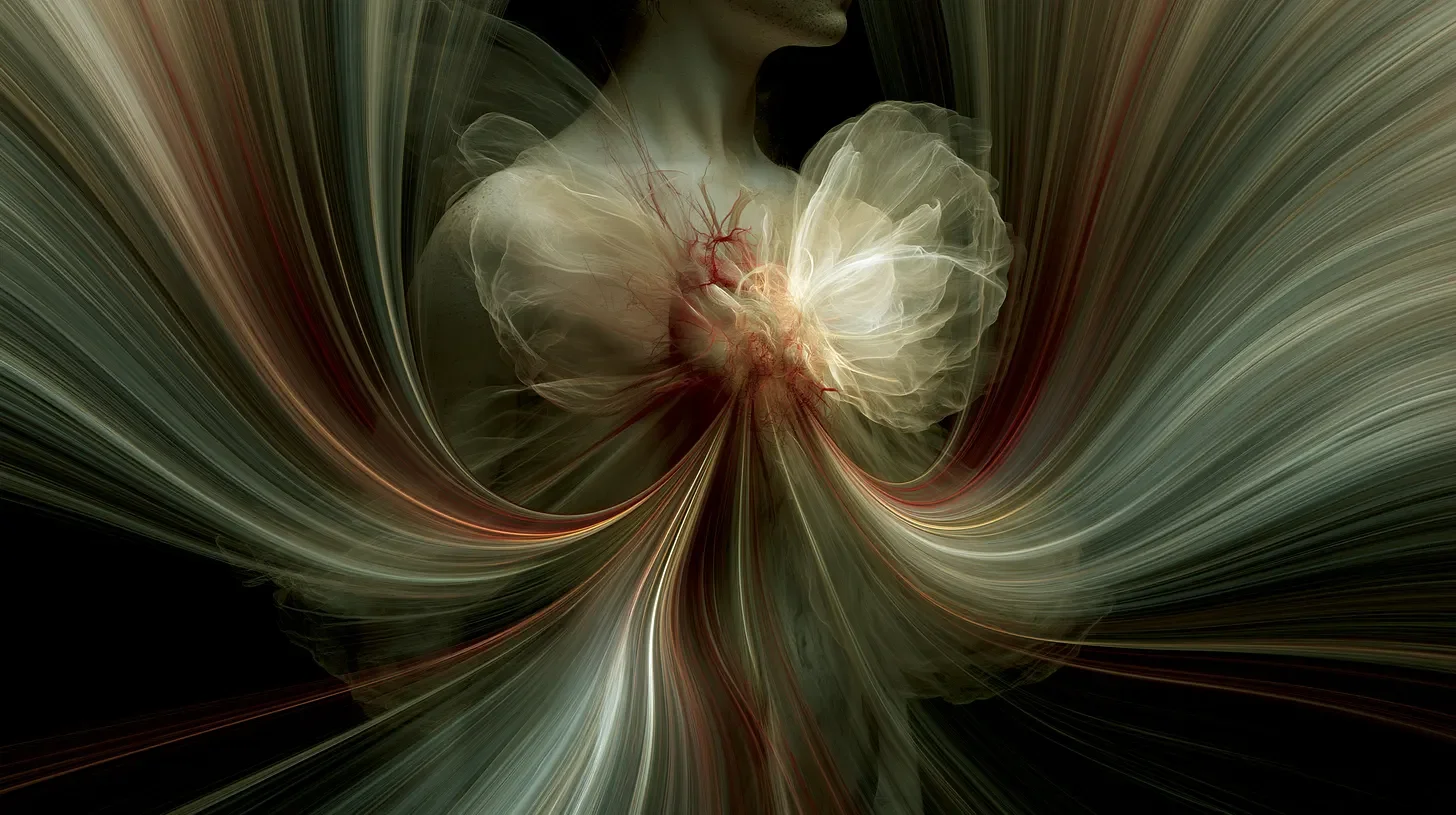
The body is the precondition instrument of awakening. The body is the body of God. The wholly holy body.
Hello all,
A little different post today, on the tantric view of postural yoga and the right attitude toward the body. I just completed two (almost) straight months of retreat teaching, and some of the participants asked for a summary on the tantric approach to physical yoga, so I thought I would share it with you (especially relevant for any of you on a diet of only studio-based classes). If the topic interest you, you can also download my e-book from 2019, Twisted: A Brief History of Yoga in America Since 1965.
Since my first yoga teacher trainings in 2001 and 2002, I’ve taught thousands of hours of asana yoga, in studio classes, in workshops, at retreats, at festivals, and at our retreat center and eco-village on Hawai’i. Since beginning the deep work of the Heart of Yoga transmission, and the study of classical tantra in 2008, my approach to the body portion of our practice has been continuously updated.
Yoga is the natural participation of the body with life, the recognition of the body as the beauty and intelligence of the cosmos. Regular practice invites increasing precision and pleasure in the body, balanced strength and receptivity, and so much more. Yoga asana and pranayama are so varied and prescriptive. They are like snow sports: you can glide on a long trail, do ski ballet or slalom racing or make snow angels. We cultivate a wide toolset to be able to offer postures, sequences and pacing that serves the moment. We don’t teach yoga, we teach people. There is a right yoga for every body, for every age and stage. Postural yoga cultivates: breath capacity; body awareness; energy optimization; clear mind; equanimity; spinal integrity; strength; suppleness; joint mobility; balance; spaciousness; surrender; and rest.
If you’re not currently practicing, or you’re in a rut in your practice, please know that the body responds so so quickly to be invited to move and breathe, it is such a relief to find the right yoga for you.
After London this weekend, I’ll be headed back to my home studio at Sundari. Come practice with me in the coming months.
In the meantime, may you be in your own body of joy.
Sending love,
Christine Marie
How I View Postural Yoga
Many of us arrive to a yoga practice in argument with the body and its limitations, in judgment of it, and carrying ideas of the ways in which the body should be different. Practice becomes a campaign to close that gap, rather than a joyful inquiry into the body’s current state, or an invitation to spaciousness, or an energetic hygiene practice, much less a vehicle for recognition of the underlying oneness of creation, or participation in life.
Āsana in the Tantric tradition is different: it a celebration of the body as the magic of the divine made into material form. We aim to practice from reverent awareness. We bring focus, awareness, precision and love to the practice, no matter where we are in our bodily reality.
The Adaptations of a Lifetime are in the Body
All bodies are perfect bodies. The body shapes itself around the life it has lived. This can be habitual repetitive movements, like sitting at a desk or driving or typing or lifting heavy things. It can be a sport that warps the hips or shoulders. It can also be shaped by psycho emotional patterning. I see people in class with the collapsed chest of unreleased grief, or the locked hips of repressed sexuality, or jaws that has clenched since childhood, holding back what wasn’t safe to say, the high hunched shoulders common to those who hold their breath in anticipation of danger or in performance anxiety. So, many of us are not meeting the body freshly, but rather through layers of adaptation, all of them once intelligent responses to real conditions.
Protection and patterns of holding the body that harden into permanent structures become a cage. Āsana is one of the technologies for restoring the body’s range.
Adaptations of Attitude
The adaptations are not limited to the physical form. So called “laziness” or a resistance to investigating the body’s range or capacity is often resistance to domination. If a nervous system is shaped by criticism, an internalized authority may still bark orders from school, religion, performance culture, or fitness culture. For some people, the moment practice becomes another demand, the organism contracts automatically, because being told what to do means losing contact with oneself.
On the other hand, so-called “discipline” can be dissociation. Here, the practitioner might override exhaustion, numb sensation, and use productivity or self-improvement as a way to stay safely on the surface of life. Modern life rewards this disconnection.
We lose contact with the body through using eating to blunt sensation or regulate nervous states; through screens and constant stimulation, a sort of ambient noise that makes quiet intolerable; through productivity (perhaps the most seductive numbing agent, because it looks like virtue); through substances that chemically interrupt the body’s signalling system, and through endless self-improvement.
Fully inhabiting the body can feel overwhelming in a world moving at inhuman speed. And because the body, when we do arrive in it, often carries what we have been avoiding: people say yoga “hurts”, but I would reframe it as yoga reveals the fatigue, anxiety, constriction that over time have become normalized.
We can lose relationship with the body as instrument and what it needs. Like all healing, the move is to accept the history we actually have, the body as it actually is, and take responsibility for not abandoning the body further. We choose to participate more fully, in a sweet inquiry of how we might be most alive in this body.
Experiencing it as a Tuning, as an Opening
A violin does not need punishment to make music, but it does need tuning, care, resonance, openness. The body is the same. It’s already prfoundly intelligent and beautiful. With tending and clearing its full range comes through again.
Śakti, the living current of consciousness itself, moves through channels (nāḍīs) that run through the subtle and physical body simultaneously. Where those channels are open, Śakti flows. Where they are narrowed by habit, history, or chronic tension, it stagnates.
Breath, Spine, Articular Limbs: in that Order
Breath is the first principle. We keep a steady inhale and exhale throughout practice, one that nourishes and cleans out the body. The movement serves the breath, the breath serves the movement.
We keep our spine aligned, fluid and integris.
Only then do we concern ourselves with the placement of the hands and feet and arms and legs and gaze and locks.
Alignment as Conductivity
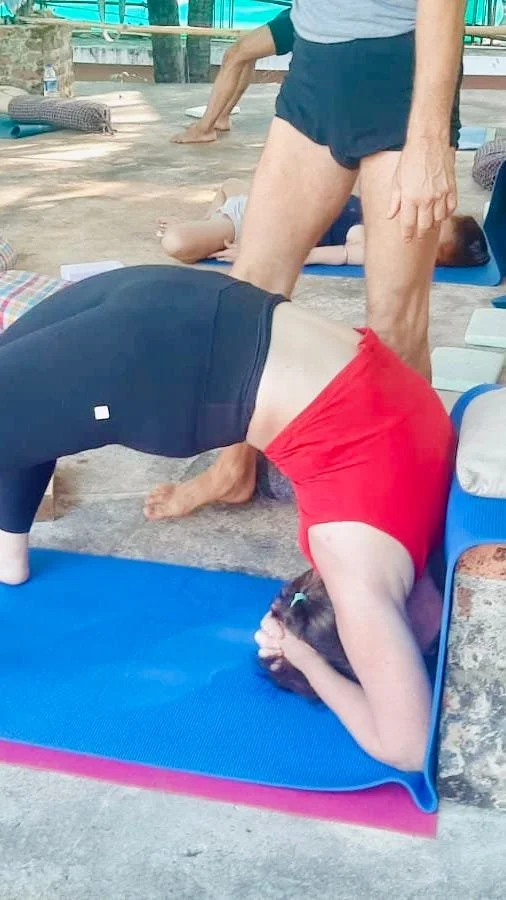
In a conventional frame, alignment correction brings the pose closer to an aesthetic or biomechanical ideal. In Living Tantra, a correction does something different: it clears a channel. I often teach the body as a circuit board. The body conducts. Current moves through it, flowing freely in some regions, stuttering in others, shorting out where there’s old armoring. The body is telling us constantly, where the circuit is open and where it’s resistant.
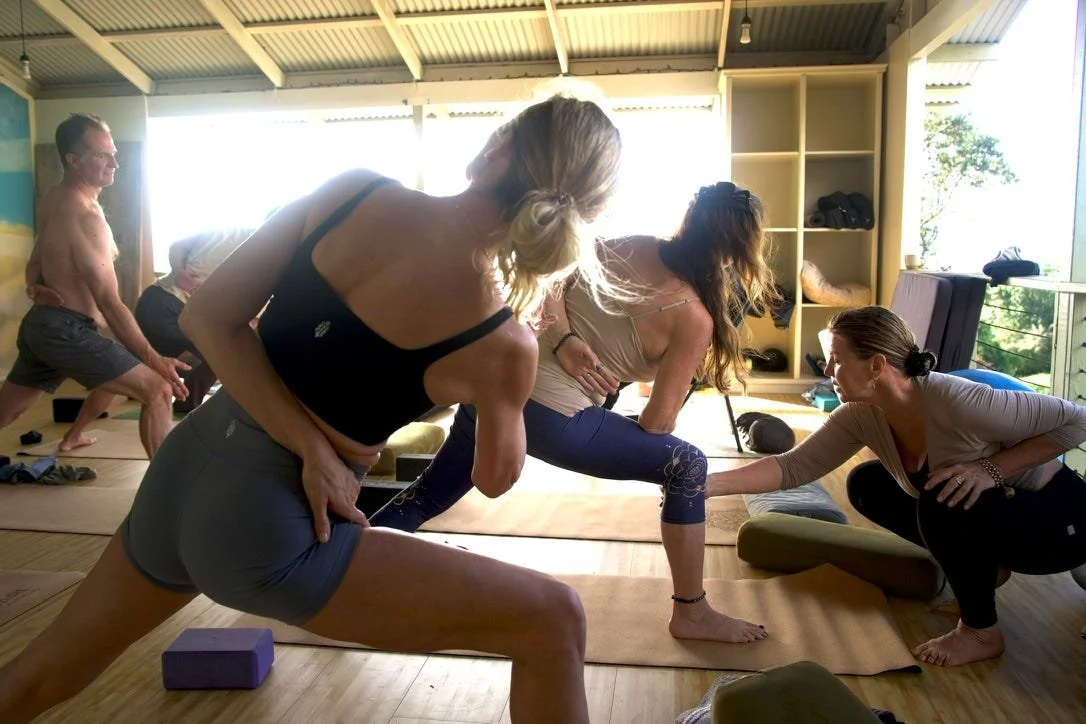
You can feel this in real time. A subtle shift in the ribcage and suddenly there is breath where there was no breath. A release in the hip flexors and something (emotion, sensation, some third thing?) begins to move. The instrument opens by one degree and the sound changes immediately.
A numb place is usually an intelligent adaptation, so we restore conduction gently. Forcing is a sure way to be injured or re-injured- in postural practuce and life.
A good correction creates spaciousness. If an adjustment produces bracing rather than opening, it has missed. Alignment is in service of aliveness, not aesthetics.
Does consciousness move more freely here now?
The body is alive with the primal pulse of consciousness itself, present in every cell, in the subtle tremor that runs through a body genuinely inhabiting a pose. Practice begins with listening before shaping. Before entering a pose: what is actually here? What is the system’s current state? How do I move in with care and dynamically create more space?
Sthira–Sukham: Steady and Easeful
Patañjali’s āsana instruction offers a very simple instuction: sthira-sukham asanam— let your seat be steady and sweet, awake without strain, alert without anxiety.
Too much sthira without sukham becomes rigidity.
Too much sukham without sthira becomes collapse.
The pose becomes alive when effort and ease are in balance, when the nervous system remains open under intensity, when breath continues to move, when awareness stays embodied. This is viśrānti: rest in the midst of activity. The body has found its stride.
Tapas: Liberating Melting Heat
Tantra is not soft, it asks for genuine engagement, real intensity, real heat, real encounter with the edges of what you can stay present within. The tradition absolutely values discipline.
But the discipline it values is not self-violence. It is discipleship, followed fron love.
Tapas, the transformative heat of practice, is produced when you stay with sensation, intelligently breathe through resistance instead of collapse, and remain conscious in intensity rather than managing it from a distance.
The difference between tapas and bullying is not the intensity of the practice, but the quality of attention brought to it.
Coercion narrows attention: grit your teeth through it, make it stop, override the signal
Tapas widens attention: what is actually happening here? Can I stay in contact with this without needing it to be different?
Bullying says: force through. Tapas says: stay awake.
Two failure modes are:
Aggressive discipline — glorifying pain, dissociating from sensation, treating suffering as spiritual currency — teaches the body to brace. It can execute the poses. It holds its breath through all of them.
Comfort seeking as escape — calling every edge a signal to retreat — leaves the instrument cramped. Nothing opens that wasn’t already open.
The middle path is conscious intensity: full engagement, no coercion. The fire of presence without the violence of punishment.
Joy as Diagnostic
In Living Tantra, joy is feedback that energy is flowing. Ānanda, or bliss, is the intrinsic quality of open awareness. It surfaces when contraction lifts enough to let it through.
Genuine aliveness in practice feels like resonance, openness, a deep embodied yes. When practice becomes only obligation and the aliveness drains out, that is information: contact has broken somewhere. The question is where.
“Peak performance” is instead seen as “Full participation”. The body functions in dynamic peace.
Peace With Material Reality
The body is the closest form of material reality. Peace with the body is full engagement with this life, without the chronic undertow of fighting against what is. Liberation in this tradition does not require leaving the body.
Yoga Nerd Bonus: Sanskrit Glossary
Ānanda — Bliss; one of the three primary qualities of Śiva (sat-cit-ānanda)
Āsana — Seat; posture; the third limb of Patañjali’s aṣṭāṅga yoga
Jagat-sāmarasya — Harmony with the arising world; equanimity-in-engagement
Mala — Impurity; that which obscures recognition
Nāḍī — Channel in the subtle body through which prāṇa/Śakti flows
Prāṇa — Life force; the animating energy expressed through breath
Pratyabhijñā — Recognition; re-knowing one’s own nature
Sat-cit-ānanda — Truth-consciousness-bliss; the three-fold nature of awareness
Śakti — The dynamic energy of consciousness; the creative and manifesting power
Śiva — The one undivided consciousness; the ground of all reality
Spanda — The primal pulse or throb; the dynamic vibration of consciousness in all reality
Sthira — Steadiness, stability; the effort pole of Patañjali’s āsana instruction
Sukham — Ease, spaciousness, openness; literally ‘good space’
Svābhāva — Inherent nature; the essential quality of any particular form
Svātantra — Absolute freedom; the foundational quality of Śiva
Tapas — Transformative heat; austerity; the fire generated by sustained conscious
practice
Viśrānti — Rest; repose; the stillness at the heart of movement
